
How do you build a complete end-to-end supply chain platform and lead a UX team at Maersk?
Industry
Supply Chain
Role
Lead UX Designer
Outcome
Platform Strategy + Design Leadership
How do you build a complete end-to-end supply chain platform and lead a UX team at Maersk?
Industry
Supply Chain
Role
Lead UX Designer
Outcome
Platform Strategy + Design Leadership
How do you build a complete end-to-end supply chain platform and lead a UX team at Maersk?
Industry
Supply Chain
Role
Lead UX Designer
Outcome
Platform Strategy + Design Leadership
Summary
This challenge at Maersk revolved around building an end-to-end supply chain platform supported by an organizational design that matched this ambition. As the first UX/Design Lead in Maersk's platform, I focused on evolving the user experience from horizontal and vertical perspectives, shifting UX from a technology-centric to a product-centric role.
Read more
Summary
This challenge at Maersk revolved around building an end-to-end supply chain platform supported by an organizational design that matched this ambition. As the first UX/Design Lead in Maersk's platform, I focused on evolving the user experience from horizontal and vertical perspectives, shifting UX from a technology-centric to a product-centric role.
Read more
Summary
This challenge at Maersk revolved around building an end-to-end supply chain platform supported by an organizational design that matched this ambition. As the first UX/Design Lead in Maersk's platform, I focused on evolving the user experience from horizontal and vertical perspectives, shifting UX from a technology-centric to a product-centric role.
Read more

Old value proposition
Moving cargo on water
Maersk has traditionally been seen as transportation company - moving cargo on water. Basically their value assets are containers and vessels.
Old value proposition
Moving cargo on water
Maersk has traditionally been seen as transportation company - moving cargo on water. Basically their value assets are containers and vessels.

New value proposition
End-to-end supply chain
The real value lies in owning and providing the end-to-end logistics and thereby offering a fully integrated experience for their customers.
New value proposition
End-to-end supply chain
The real value lies in owning and providing the end-to-end logistics and thereby offering a fully integrated experience for their customers.

A complex relay race
Managing a supply chain resembles a complex, relay race, marked by numerous baton handovers. Each transition presents opportunities for human errors, making the process intricate and challenging.
This analogy highlights the need for precision and coordination at every stage, ensuring a smooth and error-free user journey.
A complex relay race
Managing a supply chain resembles a complex, relay race, marked by numerous baton handovers. Each transition presents opportunities for human errors, making the process intricate and challenging.
This analogy highlights the need for precision and coordination at every stage, ensuring a smooth and error-free user journey.

Building the world’s leading supply chain platform
Building the world’s leading supply chain platform


Shifting left
Shifting left
Shifting left
Driving a user-centric transformation
I was the first Lead UX Designer in a platform to be hired in any platform within Maersk. I help build, grow and evangalize the UX and design capacity while focusing on the horizontal and vertical experience in Supply Chain Platform. We further become the first platform within Maersk to move UX from reporting to “technology” to reporting to “product”.
This “shifting left” has meant that the UX understanding is maturing and we are now involved earlier in the process to conduct discovery and help understand the problems we are solving and identify opportunity gaps. I tell engineers that if the problem they're trying to solve includes people, they probably need design.
Shifting left
Driving a user-centric transformation
I was the first Lead UX Designer in a platform to be hired in any platform within Maersk. I help build, grow and evangalize the UX and design capacity while focusing on the horizontal and vertical experience in Supply Chain Platform. We further become the first platform within Maersk to move UX from reporting to “technology” to reporting to “product”.
This “shifting left” has meant that the UX understanding is maturing and we are now involved earlier in the process to conduct discovery and help understand the problems we are solving and identify opportunity gaps. I tell engineers that if the problem they're trying to solve includes people, they probably need design.

Guiding a diverse and dynamic UX team
At its peak, I led a team of 14 skilled UX designers, visual designers, and researchers. This team marked a significant phase in my career. Within just 12 months, the team grew double in size. I was responsible for recruiting and fostering a culture of growth, value and psychological safety. Our team's diversity was one of our strengths, encompassing six nationalities and spanning four time zones.
Guiding a diverse and dynamic UX team
At its peak, I led a team of 14 skilled UX designers, visual designers, and researchers. This team marked a significant phase in my career. Within just 12 months, the team grew double in size. I was responsible for recruiting and fostering a culture of growth, value and psychological safety. Our team's diversity was one of our strengths, encompassing six nationalities and spanning four time zones.
Gallup survey results
Gallup survey showcases strong team commitment
In our latest Gallup survey, the UX team excelled with a 4.25/5.00 engagement score, surpassing the platform average and highlighting our commitment to productivity and job satisfaction
Gallup survey results
Gallup survey showcases strong team commitment
In our latest Gallup survey, the UX team excelled with a 4.25/5.00 engagement score, surpassing the platform average and highlighting our commitment to productivity and job satisfaction

Platform Team
Gallup engagement
0
5
3.90
UX Team
Gallup engagement
0
5
4.25
User types
Different user groups.
Different needs.
Our platform serves both internal and external users, adapting to diverse task complexities. Each user journey must be tailored for optimal solutions and experiences.
User types
Different user groups.
Different needs.
Our platform serves both internal and external users, adapting to diverse task complexities. Each user journey must be tailored for optimal solutions and experiences.

Strategic shift
From useful to desirable
My focus was to elevate our platform beyond mere utility, making it not only functional but also highly desirable to users.
Strategic shift
From useful to desirable
My focus was to elevate our platform beyond mere utility, making it not only functional but also highly desirable to users.


Platform Observations
Identifying core foundational challenges about the platform and the organization
Platform Observations
Identifying core foundational challenges about the platform and the organization

Fragmented interface across applications
Users encounter varying menu structures and tab arrangements, leading to a disjointed and incoherent platform experience.

Unclear task flows for users
Users encounter varying menu structures and tab arrangements, leading to a disjointed and incoherent platform experience.

Mismatched interface with linear operations
The platform's interface doesn’t align with the linear progression of document and cargo movements, complicating the user journey.

Information overload hinders user efficiency
Users face an overload of upfront information, making navigation cumbersome with excessive manual filtering.

Feature addition without strategic iteration
New features are added to an already flawed experience without necessary restructuring or iterative improvements.

Incomplete workflow integration
The platform's partial workflow management pushes users to seek external solutions, indicating a gap in providing a comprehensive experience.

One-size-fits-all approach falls short
Catering to a broad spectrum of users without specific focus leads to diluted solutions that don't fully meet any group's needs.

Lack of proactive user control
The necessity of alerts signals a shortfall in empowering users with proactive control over their tasks and processes.

Communication channels prone to errors
Relying on external communication methods like email and phone calls exposes users to potential errors, indicating a need for more integrated communication solutions within the platform.

Fragmented interface across applications
Users encounter varying menu structures and tab arrangements, leading to a disjointed and incoherent platform experience.
Inconsistent experience

Fragmented interface across applications
Users encounter varying menu structures and tab arrangements, leading to a disjointed and incoherent platform experience.
Not task based

Fragmented interface across applications
Users encounter varying menu structures and tab arrangements, leading to a disjointed and incoherent platform experience.
Non-linear processes

Fragmented interface across applications
Users encounter varying menu structures and tab arrangements, leading to a disjointed and incoherent platform experience.
Overload of irrelevant info

Fragmented interface across applications
Users encounter varying menu structures and tab arrangements, leading to a disjointed and incoherent platform experience.
Build and forget mentality

Fragmented interface across applications
Users encounter varying menu structures and tab arrangements, leading to a disjointed and incoherent platform experience.
Disruptive workflows

Fragmented interface across applications
Users encounter varying menu structures and tab arrangements, leading to a disjointed and incoherent platform experience.
Diverse user needs, undefined focus

Fragmented interface across applications
Users encounter varying menu structures and tab arrangements, leading to a disjointed and incoherent platform experience.
Control and notification issues

Fragmented interface across applications
Users encounter varying menu structures and tab arrangements, leading to a disjointed and incoherent platform experience.
Vulnerability to human errors
Siloed experience
Transitioning from isolated, app-specific experiences…
Siloed experience
Transitioning from isolated, app-specific experiences…

Swipe below

Swipe below
Platform thinking
… To a unified, seamless user journey across all applications
Platform thinking
… To a unified, seamless user journey across all applications
Dynamic entry
One entry to offer each user type an overview of their tasks and to-dos
Dynamic entry
One entry to offer each user type an overview of their tasks and to-dos

A seamless journey
A seamless, linear flow from product to product
A seamless journey
A seamless, linear flow from product to product

A guided experience
A clearly defined start + end for all work flows to guide users effortlessly into the next experience
A guided experience
A clearly defined start + end for all work flows to guide users effortlessly into the next experience
Swipe below

Project Flea Market
Project Flea Market
A complex process of analyzing existing components, deconstructing and rebuilding
A complex process of analyzing existing components, deconstructing and rebuilding


From a platform with A LOT of pages each with a fractured user experience...
From a platform with A LOT of pages each with a fractured user experience...


... As well as many different types of components
... As well as many different types of components

To a unique system
To a unique system
Info Cards

Info Cards
Table
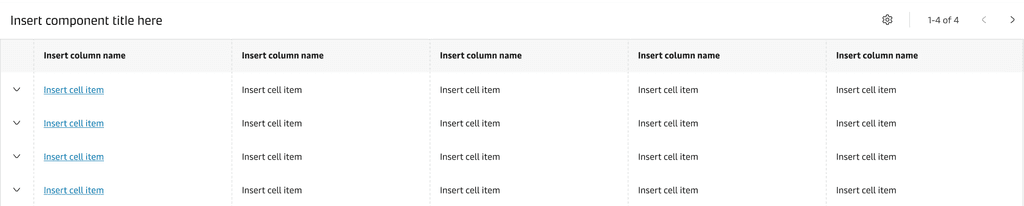
Table
Platform Header

Platform Header
Page Header

Page Header
Nav

Customize

Side Panel

Side Panel
Nav
Customize
Side Panel
Side Panel
Filters

Customize
Resulting in helping product teams with a framework for building new pages
Resulting in helping product teams with a framework for building new pages


As well as resulted in raising and levelling the experience baseline across all products
As well as resulted in raising and levelling the experience baseline across all products

